
What Can a Force Do?
Aim
Observe and record the different effects that a push or a pull (a force) can have on an object.
Apparatus
- A large cardboard box
- A ball and a ruler or a light bat
- An inflated balloon and a rubber band
- A toy car or any object that rolls
- A notebook and pencil
- Chart paper and sketch pens
Procedure
- Put the box on the floor and give it a gentle push.
- Set the toy car rolling, then push it from behind. Does it speed up?
- Roll the ball and tap it sideways with the ruler. Watch its path.
- Press the balloon between your palms, and stretch the rubber band. Watch their shape.
- Record each action as a push or a pull, with the effect you saw.
- Draw a chart of the four effects of a force, with one example of each.
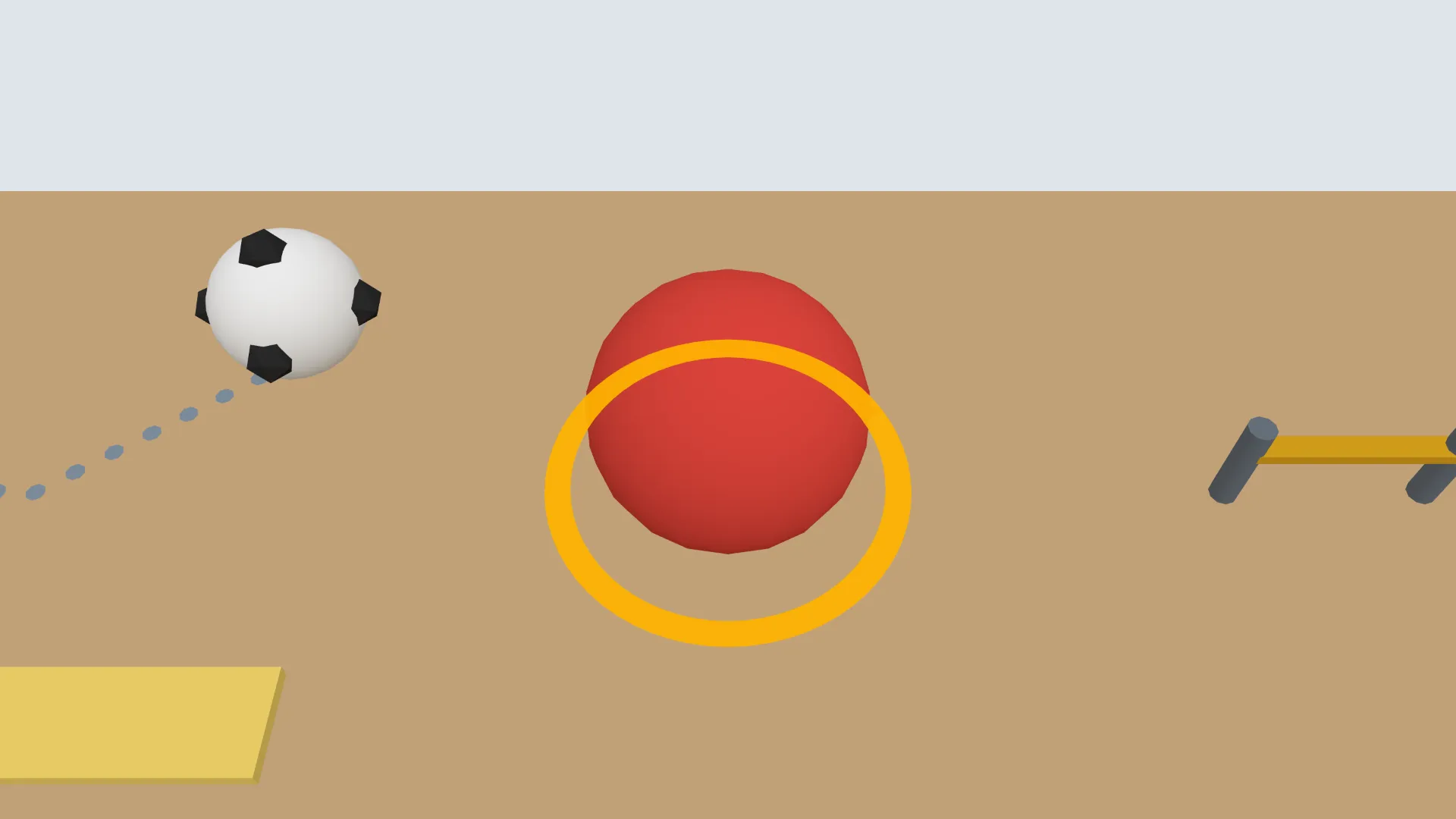
Interactive 3D Experiment
Loading simulation…
What to observe
- A force can make an object at rest start to move.
- A force can change the speed of a moving object.
- A force can change the direction of motion.
- A force can change the shape or size of an object.
- One force can have more than one effect at the same time.
Notes
- The SI unit of force is the newton (N). About 1 N is the pull of gravity on a small apple of about 100 g.
- Do this in an open space, away from windows, glassware and other students.
- Push and tap gently. The aim is to see the effect of a force, not to hit hard.
- Do not over-inflate the balloon or over-stretch the rubber band. Either may burst and hurt the eyes.
- Roll the ball along the floor only, never at a person.