
Every Drop Counts — Auditing Water Use and Wastage
Aim
To observe patterns of water use at home, estimate the water wasted in common activities, and suggest practical ways to conserve this precious renewable resource.
Apparatus
- Science notebook / lab record and pencil
- A 1-litre plastic bottle or a measuring jug
- A stopwatch or a watch with a seconds hand
- A bucket (for the tap-flow estimation)
- Chart paper and sketch pens (for the class summary chart)
Procedure
- With an adult's help, time how long a 1-litre bottle takes to fill under a running tap.
- Choose five daily water-use activities, such as hand washing and brushing teeth.
- For each activity, estimate the extra seconds the tap runs without being used.
- Use the tap-flow estimate from Step 1 to work out the water wasted for each activity.
- For each activity, note one practical way to reduce the wastage.
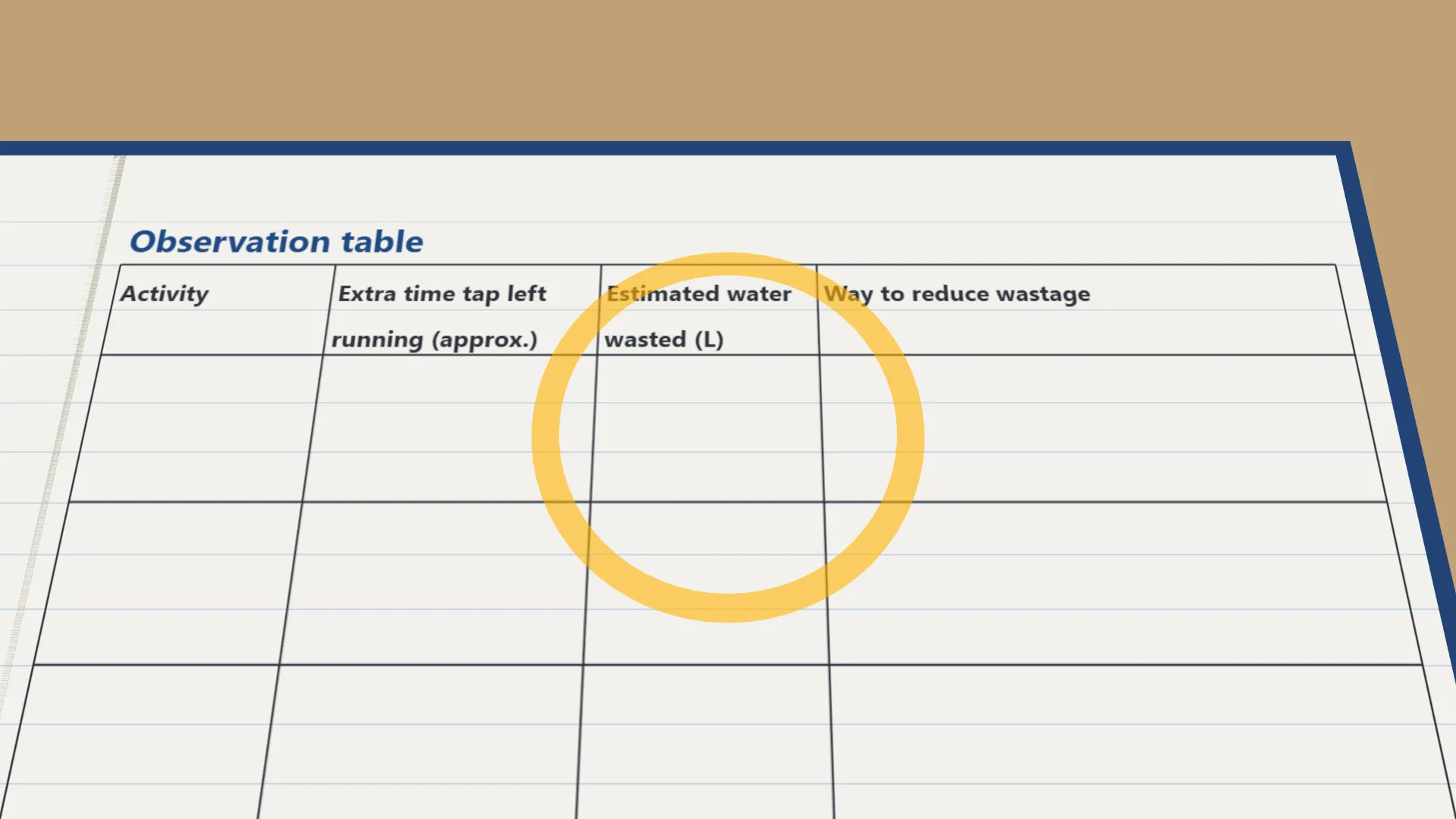
- Record all your findings in the observation table.
Interactive 3D Experiment
Loading simulation…
What to observe
- How many seconds the 1-litre bottle takes to fill, and how much water flows in 10 seconds.
- A tap left running even for a short time wastes litres of water.
- Every activity has a simple way to waste less.
Safety
- Take the tap-flow measurement only at home and only with an adult present. Never climb on a stool, bucket or washbasin to reach a tap.
- Collect the water in a bucket and reuse it for plants, mopping or flushing. Turn the tap off fully after every measurement.
- Never take the measurement at a hot-water tap or geyser outlet, and never touch an electrical switch, geyser or washing machine with wet hands.
- Use a plastic bottle or jug rather than glass, wipe up spills at once, and never lift a full bucket by yourself.
- Never lean into, climb on or open a water tank, sump, drum or well. Estimate honestly, and discuss other homes' water use respectfully.
Notes
- Science Spark: Water covers about 71% of the Earth's surface, but only a very small fraction of it is easily accessible freshwater. Most of the rest is salty ocean water or locked away in ice sheets and deep underground.