
Exploring the Vedas and Vedic Values
Aim
To explore the four Vedas as India’s most ancient texts, to place key events on a simple timeline, and to identify the values expressed in well-known Vedic hymns.
Apparatus
- Notebook or chart paper
- Sketch pens or coloured pencils
- A ruler
- The textbook chapter (for the two Vedic quotations and the timeline)
Procedure
- Read the Subhāṣhita on the wealth of true knowledge and the closing mantra of the Ṛig Veda.
- Discuss what each quotation means in your own words, and note one key value in each.
- List the four Vedas and write one interesting fact about each.
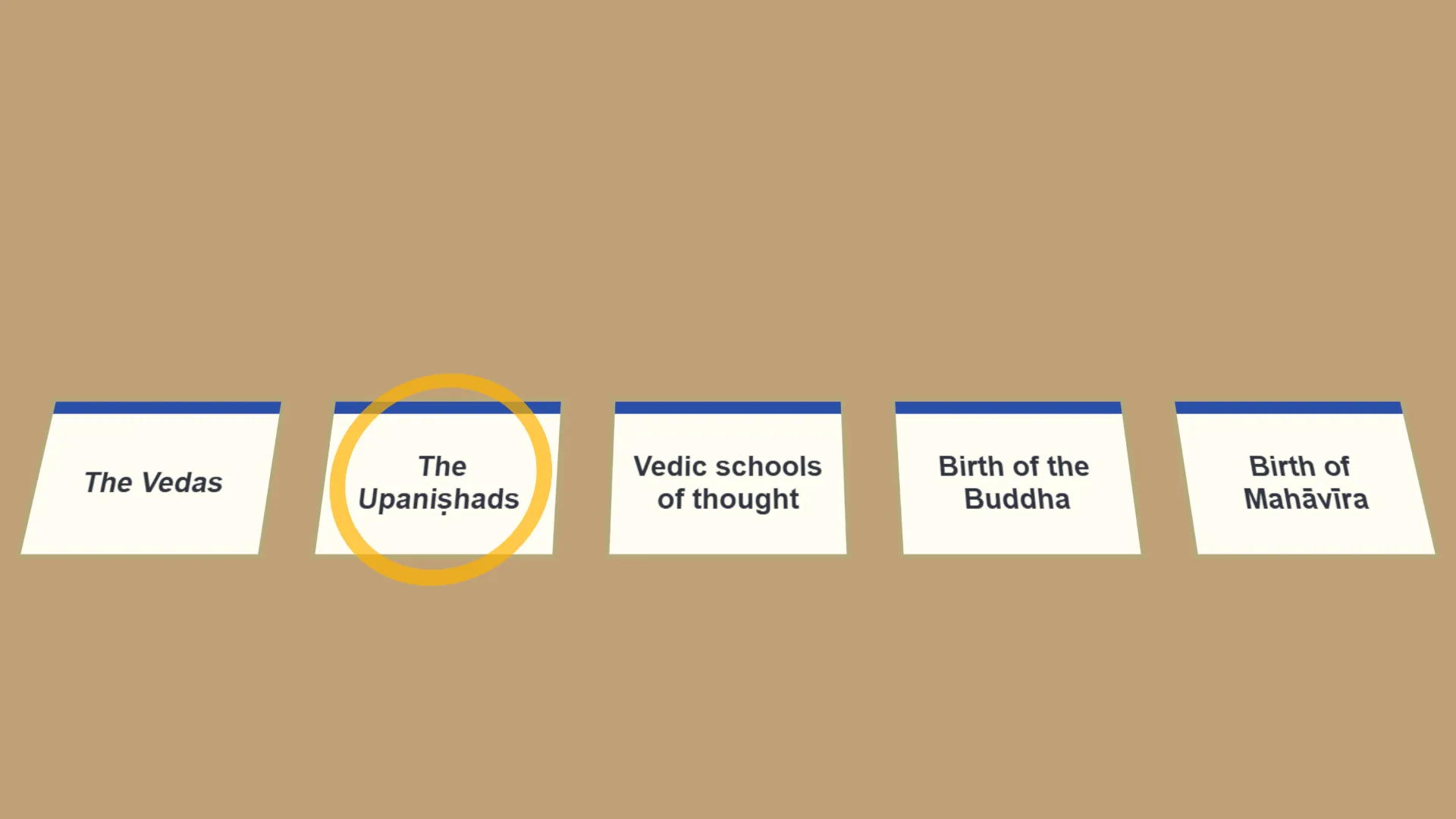
- Draw a timeline from 1500 BCE to 500 CE. Mark the Vedas, the Upaniṣhads, the schools of thought, and the births of the Buddha and Mahāvīra.
- Write two values that the Vedic hymns emphasise, for example Truth and Unity, with an example of each.
- Present your timeline and values chart, and discuss why oral transmission of the Vedas is remarkable.
Interactive 3D Experiment
Loading simulation…
What to observe
- The Vedas are among India’s most ancient texts, and the four Vedas are the Ṛig, Yajur, Sāma and Atharva.
- The Vedic hymns stress values such as truth and unity.
- The Vedas were passed on by voice alone for many generations.
Safety
- Copy Sanskrit terms and quotations accurately from the textbook.
- Handle chart paper and reference material with care.
Notes
- This careful oral transmission of the Vedas over thousands of years - between 100 and 200 generations - is why, in 2008, UNESCO recognised Vedic chanting as “a masterpiece of the oral and intangible heritage of humanity”.