
Tracing Value Addition in a Local Product
Aim
To trace how a raw material is turned into a finished product, like Rajesh the carpenter did, and to calculate the value added at each stage.
Apparatus
- Notebook
- Pencil or pen
- Calculator (optional)
- Information from a local shopkeeper
Procedure
- Choose one locally made product, like Rajesh the carpenter's wooden chair.
- With a shopkeeper's help, find out the cost of the raw material (the wood).
- Follow how the chair is made, then find the price it is sold at in the market.
- Calculate Value Added = Selling Price − Raw Material Cost.
- Note the skill, time and effort behind this value, and record everything in the table.
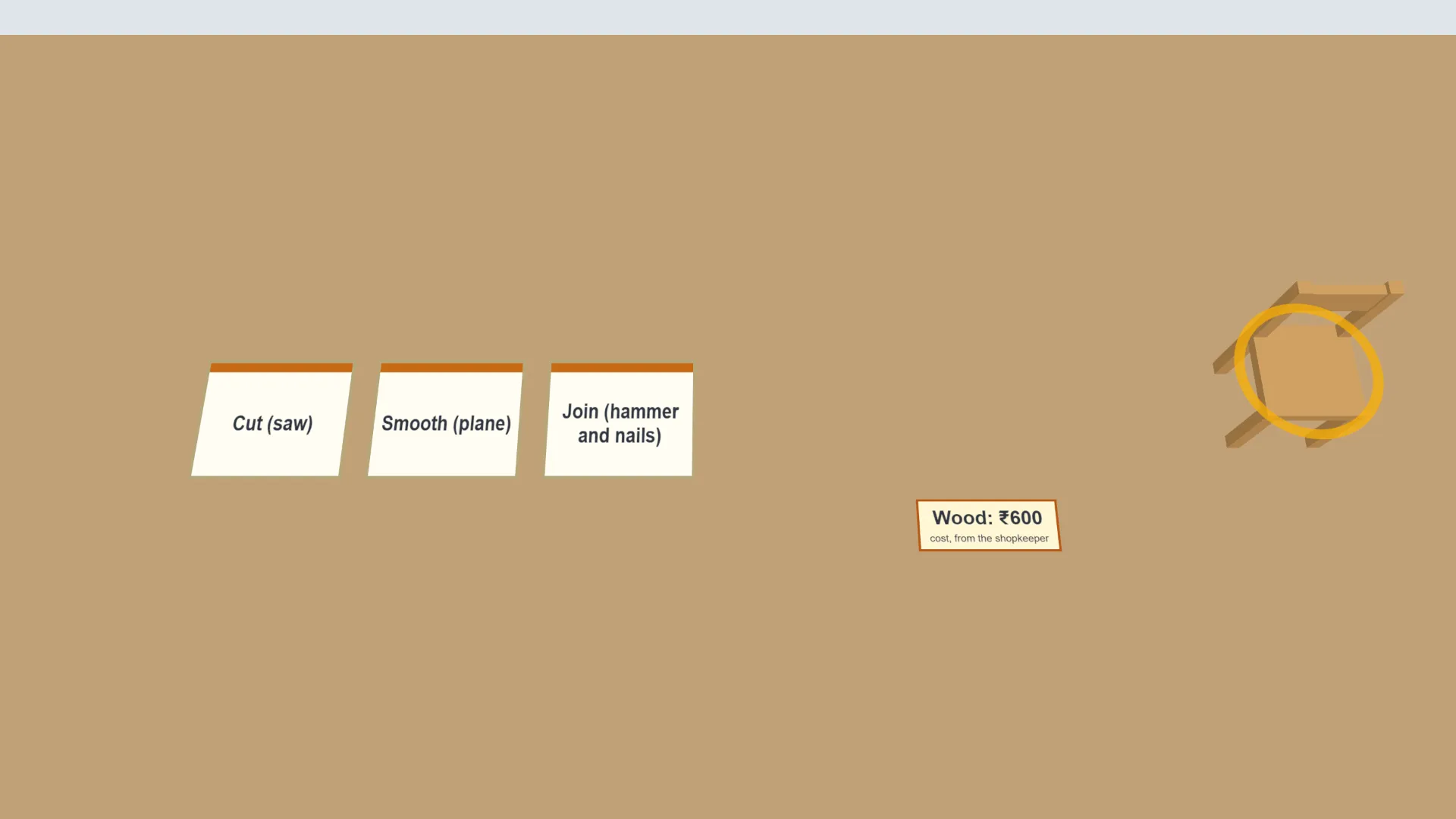
Interactive 3D Experiment
Loading simulation…
What to observe
- The wood costs ₹600 and the chair sells for ₹1,000, so the value added is ₹400.
- The ₹400 is the money value of Rajesh's skill, time and effort in making the chair.
Notes
- A wage is paid by an employer for a period of time. Payment in kind is a non-cash payment, like Sahil the farm labourer being paid partly in mangoes.
- Record only approximate, honestly reported prices. Be polite when you ask shopkeepers or artisans about costs and earnings.
- The rows left empty in the table are for products you trace yourself.