
Touch, Temperature and the Clinical Thermometer
Aim
Show that touch is not a reliable measure of hot and cold, and measure body temperature correctly with a digital clinical thermometer.
Apparatus
- Three large containers or mugs (labelled A, B and C)
- Warm water, tap water and ice-cold water
- A digital clinical thermometer (with its instruction manual, if available)
- Soap, water and a clean cloth or tissue to clean the thermometer tip
- Science notebook / lab record and pencil
Procedure
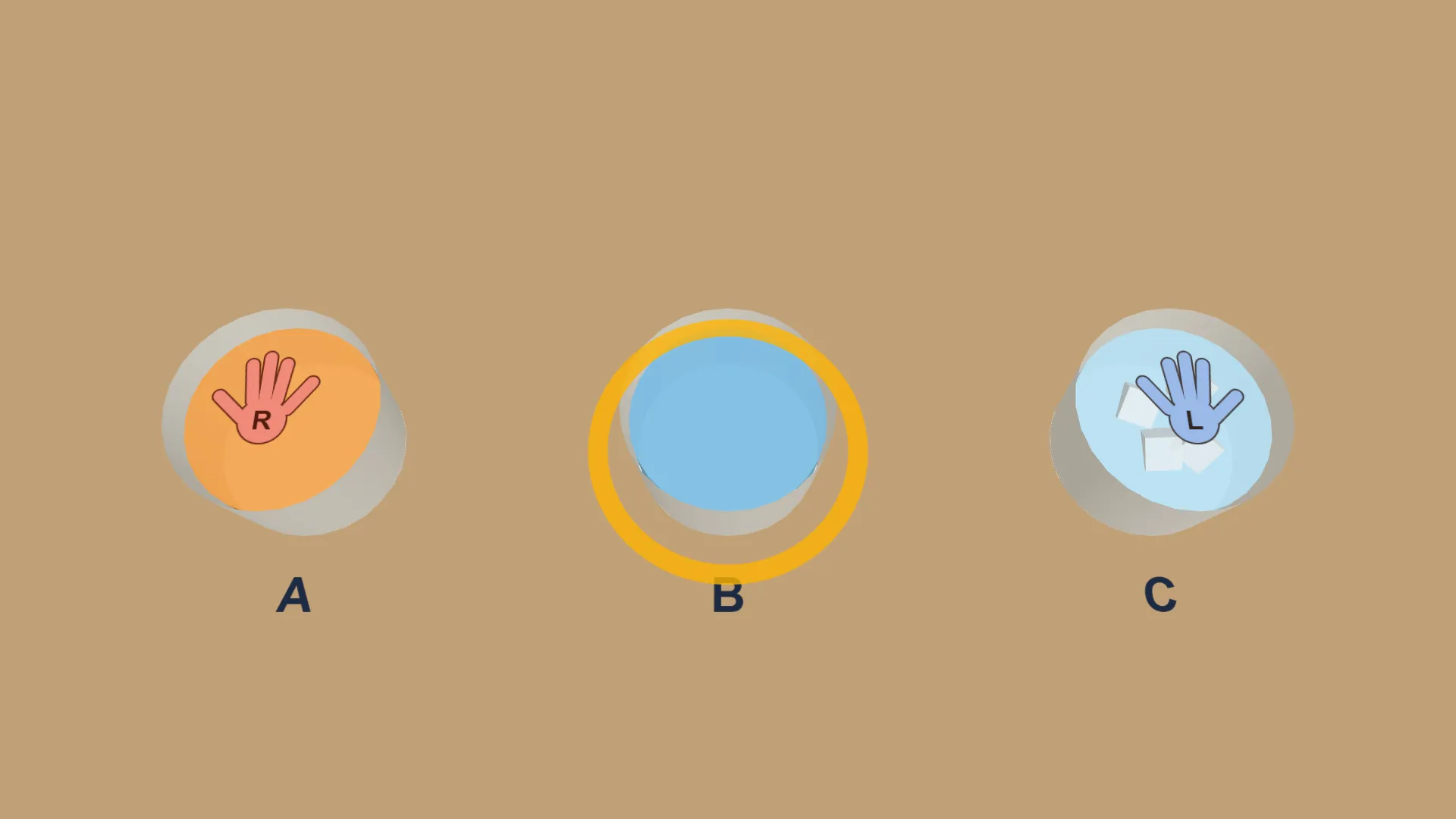
- Part A: Label three containers A, B and C.
- Part A: Pour warm water in A, tap water in B and ice-cold water in C.
- Part A: Predict what each hand will feel when both are put in B.
- Part A: Keep your right hand in A and your left hand in C for 1–2 minutes.
- Part A: Put both hands in B. What does each hand feel?
- Part A: Compare with your prediction. Why can the same water feel different?
- Part B: Wash your hands and clean the thermometer tip with soap and water.
- Part B: Reset the thermometer and place it under the tongue, mouth closed.
- Part B: Wait for the beep, then remove it and read the display.
- Part B: Record the reading in °C.
- Part B: Clean the tip again and repeat for four classmates who are willing.
- Part B: Compare the five readings. Why may they differ a little?
Interactive 3D Experiment
Loading simulation…
What to observe
- How did the same water in B feel to each hand?
- Was your prediction right?
- Are the five body temperatures the same, and about how much do they differ?
Safety
- The water in A must be only comfortably warm, about 40 °C to 45 °C, checked by the teacher first. Never use boiling or freshly heated water.
- Take your hand out of the ice-cold water at once if it hurts or goes numb. Never keep it in for more than one to two minutes, and never make it a competition.
- Clean the thermometer tip with soap and water, or an antiseptic wipe, before and after every use. It must never pass from one mouth to another uncleaned.
- Do not bite the thermometer or talk with it in the mouth. Take readings only from willing classmates, and not straight after eating, drinking or running.
- Do not use these readings to decide that anyone is ill. Wipe up spills at once and keep containers away from plug points and switches.
Notes
- Anna Mani (1918–2001), the "Weather Woman of India", designed and built many of the weather-measuring instruments used across the country, so India depended less on imported equipment.