
Solid, Liquid or Gas? — Comparing the States of Water
Aim
Compare the shape, the ability to flow and the ability to spread of ice, water and water vapour, and relate these properties to the solid, liquid and gaseous states.
Apparatus
- Science notebook / lab record and pencil
- Ice cubes
- Two or three containers of different shapes
- Water
- A cup of hot water or a kettle (adult supervision required, for observing steam)
Procedure
- Put an ice cube in one container, then move it to a container of a different shape.
- Pour water from one container into another of a different shape.
- Pour a little water onto a flat tray and watch how it spreads.
- With an adult, watch steam rise from a cup of hot water and see how it spreads.
- Record in the table whether each state has a fixed shape, flows and spreads.
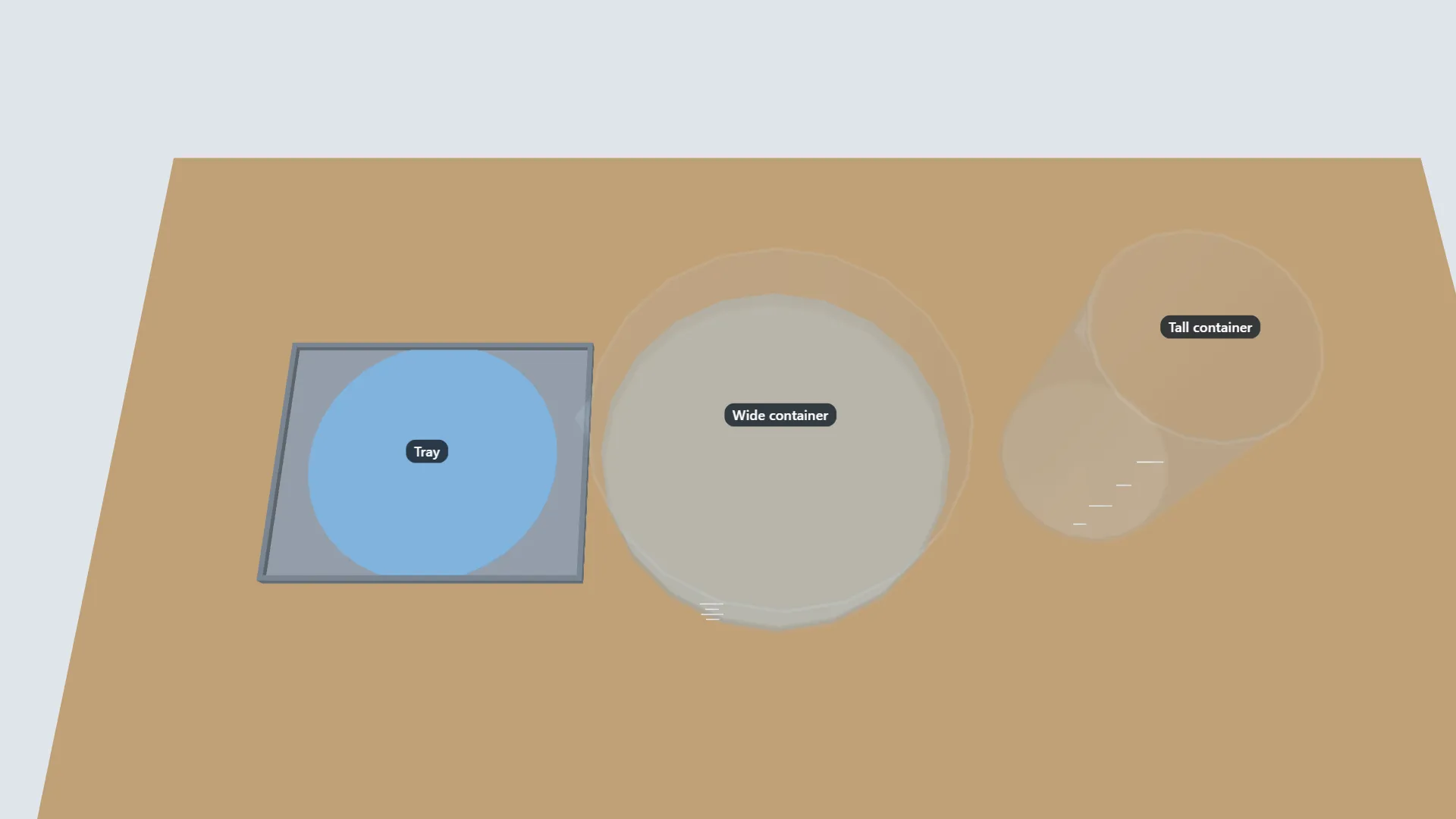
Interactive 3D Experiment
Loading simulation…
What to observe
- Does the ice cube change its shape when it is moved?
- What shape does the water take in each container?
- How does the water spread on the tray, and how does the steam spread in the air?
Safety
- Steam burns worse than boiling water. Watch it only from the side, at least an arm's length away, and never lean over the cup or wave a hand through it.
- Only the teacher pours hot water. Keep the kettle at the back of the table, unplugged, with its wire off the floor.
- Never put ice into hot water or pour hot water into thin or cracked glass, because it can shatter. Use steel or thick plastic.
- Handle ice with a spoon or dry fingers, do not hold it against the skin for long, and never put laboratory ice in the mouth.
- Wipe up melt-water and spills at once, and do not drink any of the water used.
Notes
- Water vapour is completely invisible. The white steam you see over hot tea or a boiling pot is not vapour. It is made of tiny water droplets that have already condensed in the cooler air.