
Shine, Strength and Sound
Sorting Materials into Metals and Non-metals
Aim
Test copper, aluminium, iron, coal, sulfur and wood for shine, hardness, hammering and sound, and sort them into metals and non-metals.
Apparatus
- A piece of thick copper wire and a strip of aluminium sheet
- An iron nail, a steel spoon and a coin
- A piece of coal, a pea-sized lump of sulfur and a small block of wood
- A hammer and a hard flat surface (an anvil, a metal block or a stone slab)
- Sandpaper, a hand lens, old newspaper and safety goggles
- Science notebook and pencil
Procedure
- Rub each sample lightly with sandpaper and lay them in a row on old newspaper.
- Look at each sample with the hand lens. Does it shine like a fresh coin, or look dull?
- Press or scratch each sample with your thumbnail. Is it hard or soft?
- Wear goggles. Tap each sample 3–4 times with the hammer. Does it flatten or break?
- Drop each sample from about 30 cm on to a hard floor. Is the sound ringing or dull?
- Look down the table and write metal or non-metal for each sample.
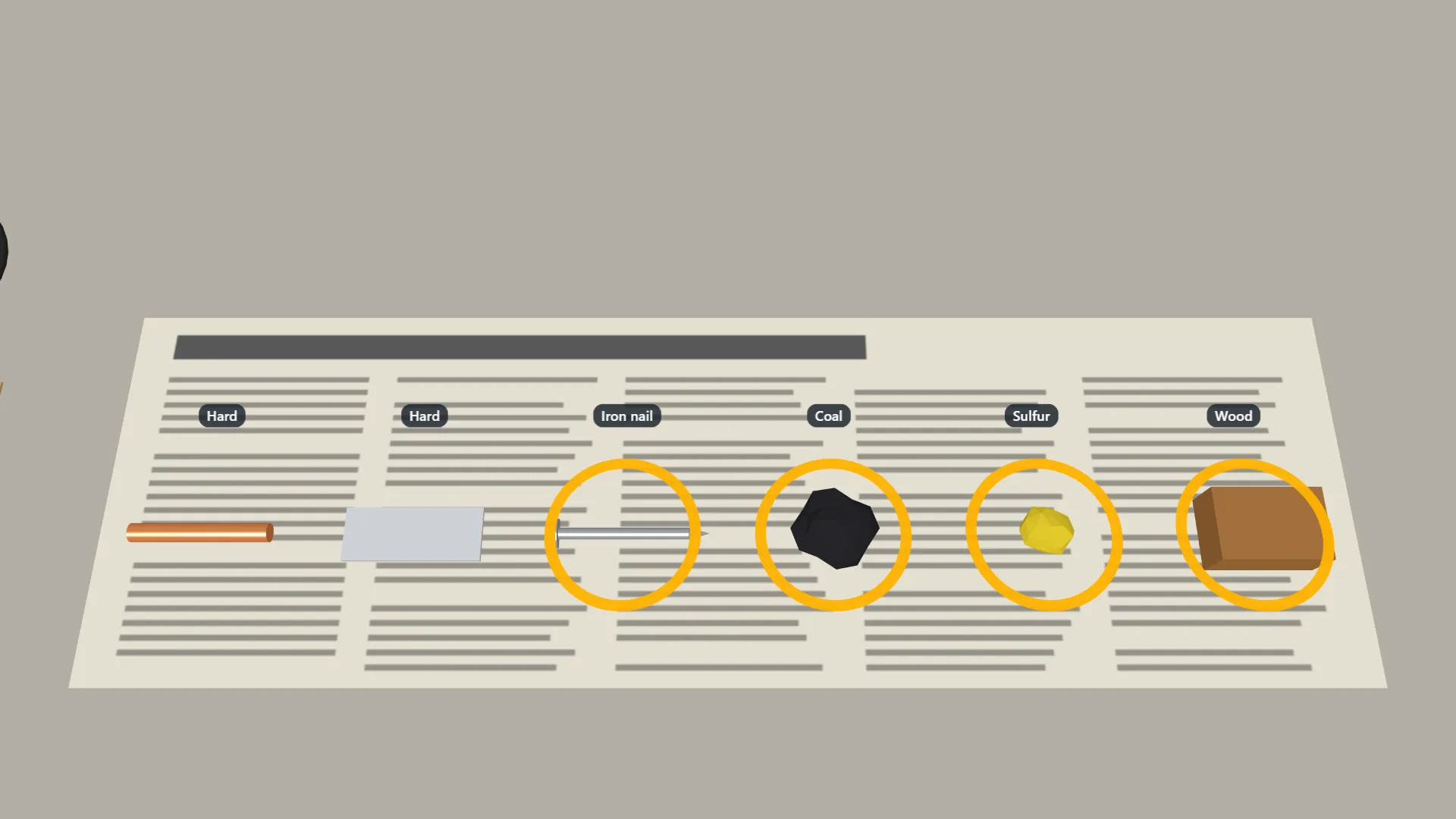
Interactive 3D Experiment
Loading simulation…
What to observe
- Copper, aluminium and iron shine, are hard, flatten when hammered and ring when dropped. They are metals.
- Coal and sulfur are dull, break into pieces when hammered and give a dull thud. They are non-metals.
- Being beaten into thin sheets is malleability; giving a ringing sound is sonorousness.
- The wood neither flattened nor broke, so not every non-metal is brittle.
- Sort a material by all its properties together, never by one property alone.
Safety
- Hammer only with your teacher watching, and only on the anvil, metal block or stone slab.
- Wear safety goggles while hammering and keep your fingers clear of the hammer. Hold the sample with tongs or a cloth.
- Tap lightly, 3–4 times. Coal and sulfur can throw sharp splinters, so hammer over old newspaper.
- Never taste or smell any sample. Keep sulfur away from your nose, your mouth and every flame.
- Rub with sandpaper away from your face and do not blow the dust off. Wash your hands with soap at the end.
- Hand the hammer back to your teacher; never toss it across the table.
Notes
- Gold is the most ductile metal — one gram of it can be drawn into a wire about two kilometres long.
- Silver can be beaten so thin that the shiny varak on Indian sweets is only a few thousandths of a millimetre thick.