
Sorting It Out — Handpicking, Sieving and Winnowing
Aim
Separate dry mixtures by handpicking, sieving and winnowing, and find the property of the parts that each method uses.
Apparatus
- A small mixture of rice grains and tiny stones
- A small mixture of wheat flour with bran and a few small stones
- A handful of roasted peanuts (with loose skins)
- A kitchen sieve
- A flat plate, tray or stiff cardboard (to act as a winnowing tray)
- Two empty plates or trays for the separated parts
- Science notebook and pencil
Procedure
- Handpick the stones out of the rice, one by one.
- Note what you see about the two parts.
- Pass the flour, bran and stones through the sieve over a plate.
- Rub the roasted peanuts gently to loosen their skins.
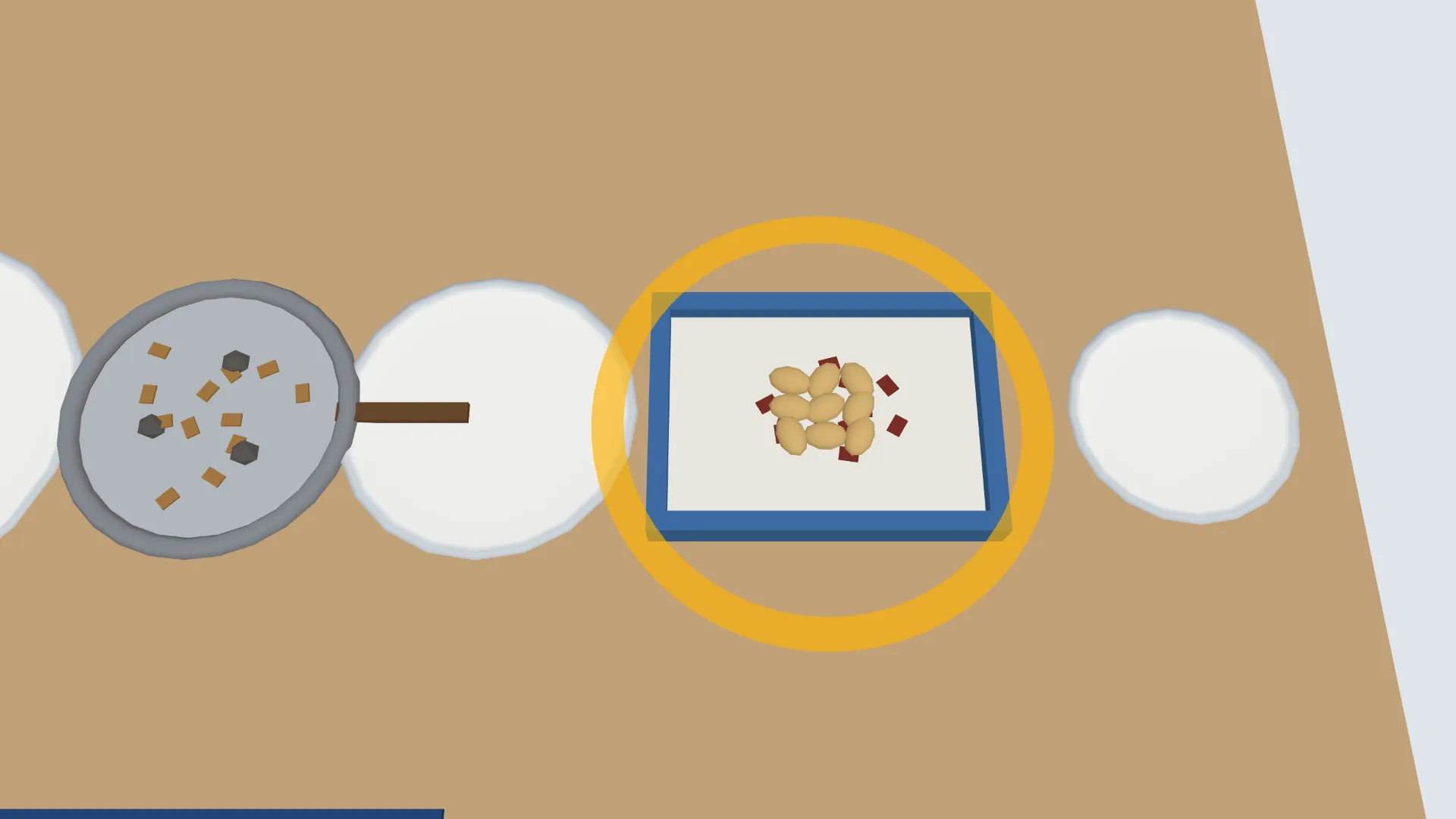
- Put the peanuts and skins on the tray and toss gently in a slow breeze.
- Write what you saw for each mixture in the table.
- Compare the three methods. Which property does each one use?
Interactive 3D Experiment
Loading simulation…
What to observe
- Which parts were picked out, which passed through the sieve and which stayed on it?
- Which part of the peanuts was carried away by the breeze, and which stayed behind?
- Which property (size, weight or colour) does each method use?
Safety
- Do not eat the rice, flour or peanuts. Wash your hands with soap before and after.
- Anyone allergic to peanuts must not handle, rub or sit near them. Tell the teacher beforehand.
- Winnow gently from a low height, with your face turned away and classmates behind you. Never throw the mixture into the air.
- Use a natural breeze or a slow fan, never a fast fan or blowing towards anyone's face. Students with asthma or a cold should not winnow.
- Sieve gently over the plate without banging it on the desk, and sweep up spills at once.
Notes
- The bamboo winnowing tray, called a soop, is shaped differently in different regions: flatter for grain, deeper for pulses, because the best shape depends on how heavy the husk is compared with the grain.