
Settle, Pour, Strain — Sedimentation, Decantation and Filtration
Aim
Separate insoluble solids from water using sedimentation, decantation and filtration, and compare how well each method works.
Apparatus
- Fine soil or mud
- Two transparent glasses or beakers
- A piece of clean cotton cloth
- Filter paper and a funnel
- A conical flask or a third glass to collect the filtrate
- A spoon for stirring
- Science notebook / lab record and pencil
Procedure
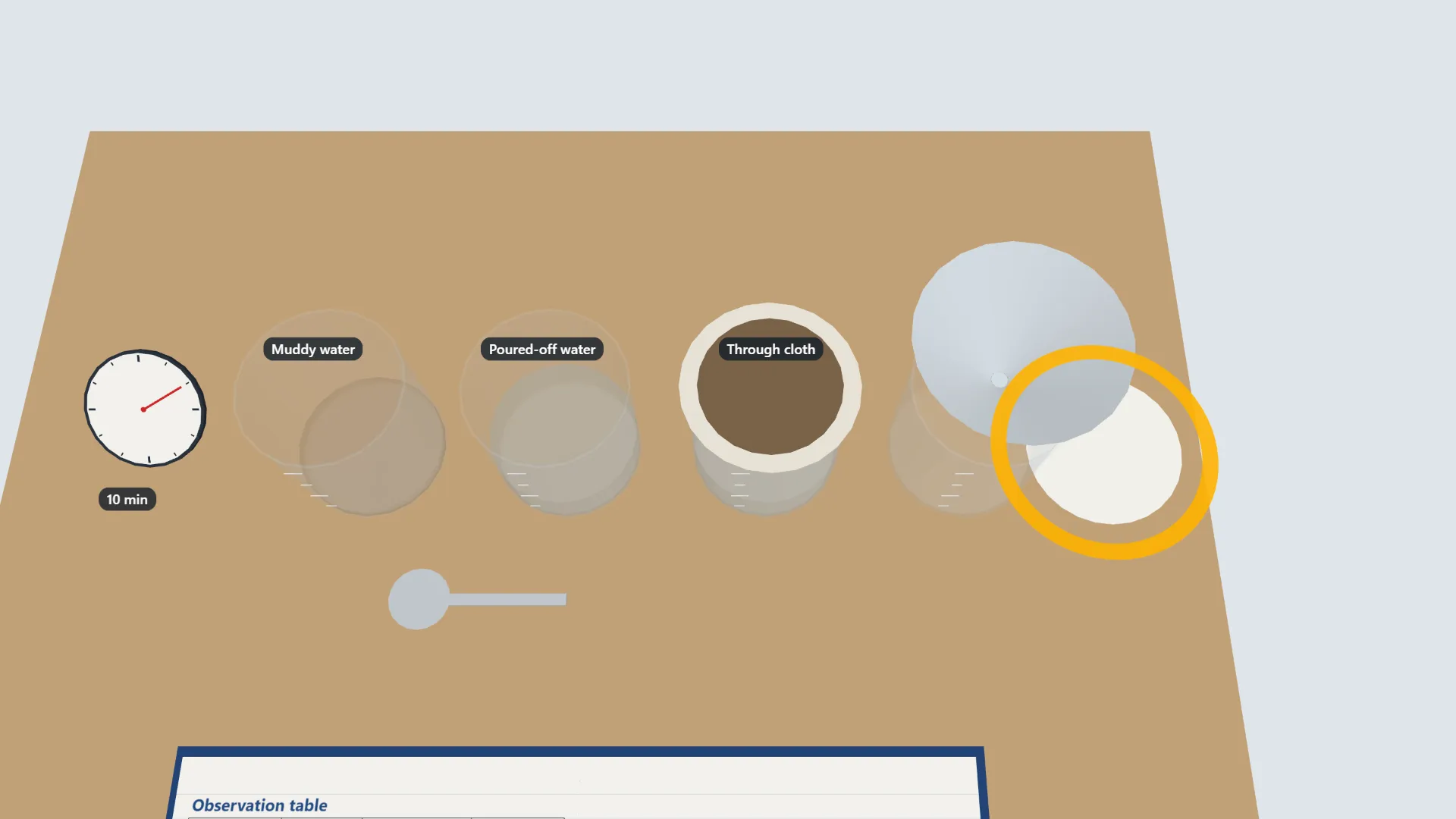
- Stir a spoonful of soil into a glass of water to make it muddy.
- Let the glass stand undisturbed for about ten minutes and watch the soil settle.
- Tilt the glass gently and pour the clearer water off the top into an empty glass.
- Pour a fresh muddy sample through cotton cloth stretched over a glass.
- Fold the filter paper into a cone, put it in the funnel over the flask and pour a fresh sample through.
- Compare the clarity of the water from the cloth and from the filter paper.
- Record what you see for each method in the observation table.
Interactive 3D Experiment
Loading simulation…
What to observe
- What happens to the soil particles when the muddy water stands still?
- Is the water poured off after settling completely clear?
- Which is clearer, the water from the cloth or the water from the filter paper?
- Why does filtration remove fine mud more completely than decantation alone?
Safety
- Never drink or taste the filtrate. Clear-looking water is still not safe, because filtering removes mud but not germs.
- Stir gently and pour slowly with the receiving glass held close. If muddy water splashes into an eye, wash it with plenty of clean water and tell the teacher.
- Handle glass beakers and the funnel carefully, prefer plastic tumblers, and never pick up broken glass with bare hands.
- Keep the glass on a stable surface while it settles, set the funnel firmly in the flask and do not overfill it.
- Do not pour soil or residue down the sink, as it blocks the drain. Wipe up spills at once and wash your hands with soap.
Notes
- Large city water-treatment plants use the same two ideas, just bigger. Huge settling tanks let mud sink (sedimentation), then the clearer water passes through layers of sand and gravel that work like a giant filter before it reaches our taps.