
Identifying the Saptānga: Classifying the Seven Limbs of a Kingdom
Aim
To apply Kauṭilya's saptānga (seven-limb) theory of the state, sort statements under the seven angas, and use the idea to study an example kingdom.
Apparatus
- Textbook reference (Fig. 5.15, Kauṭilya's Saptānga)
- A worksheet with statement cards, or a notebook
- Coloured pencils or sticky notes
Procedure
- Revisit the seven angas, or limbs, of a kingdom according to Kauṭilya.
- Make a table of each anga and what it stands for in a modern nation, for example amātya and a council of ministers.
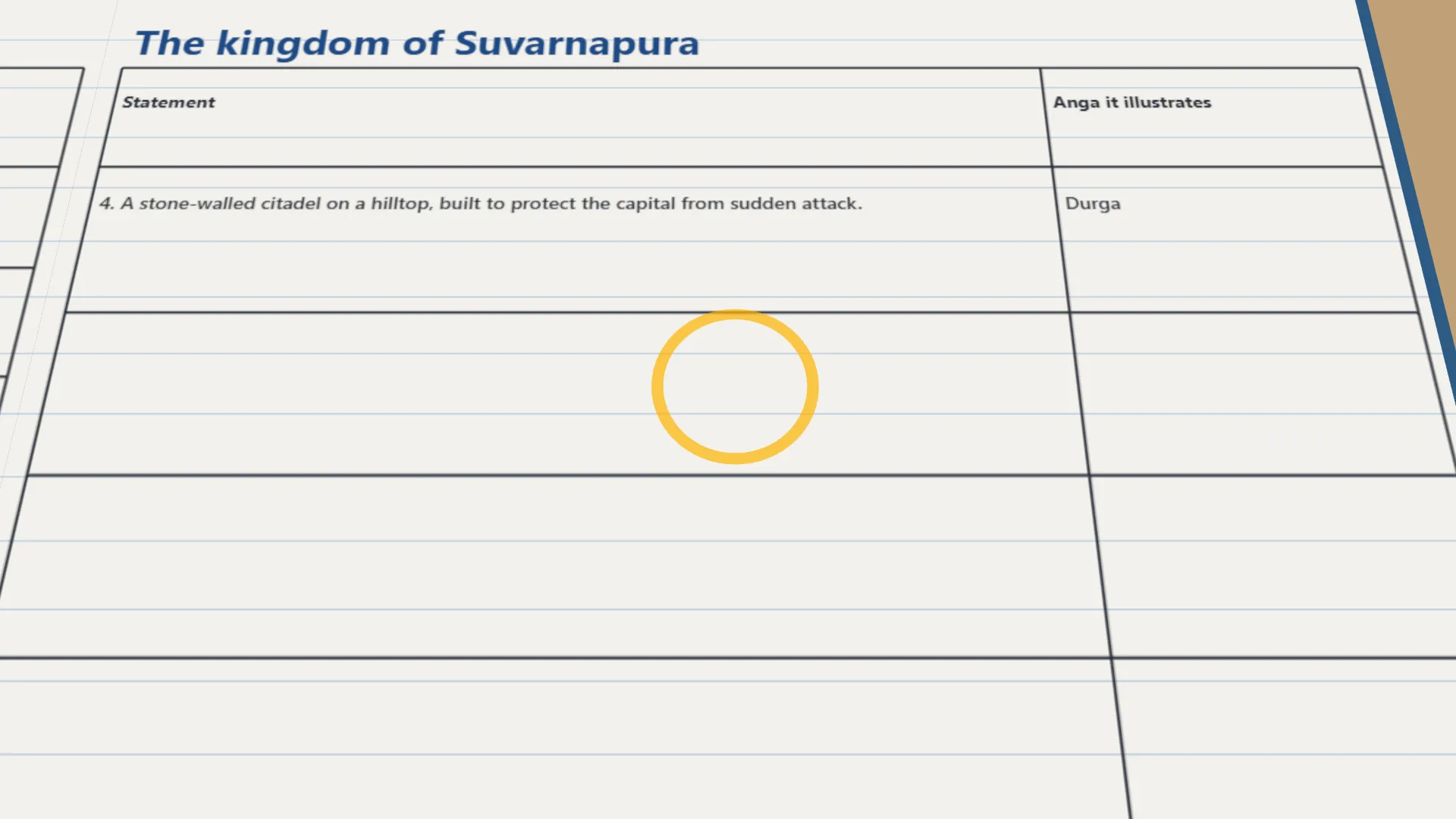
- Read the seven statements about the kingdom of Suvarnapura. Say which anga each one shows.
- Swap answers with a partner and talk about any statements you disagreed on.
- Answer the reflection question about the anga that would be hardest to do without.
Interactive 3D Experiment
Loading simulation…
What to observe
- The seven angas are swāmi, amātya, janapada, durga, koṣha, daṇḍa and mitra.
- Each statement about Suvarnapura illustrates exactly one anga.
- Like the limbs of a body, all seven angas must work together for a kingdom to stay healthy and strong.
Notes
- Social Science Spark: the word saptānga comes from Sanskrit: sapta means seven and anga means limb or part. Kauṭilya used the image of a body to show that all seven parts of a state must work together.
- Match each statement to only one anga. Discuss disagreements respectfully and check the textbook definitions when in doubt.