
Rough or Smooth?
Aim
To investigate how the force of friction depends on the nature of the surfaces in contact.
Apparatus
- Science notebook (lab record) and a pencil
- A small object with a flat base (an empty lunch box, geometry box or notebook)
- Surfaces to test: a glass sheet, a ceramic tile, a wooden plank, a piece of cloth and sandpaper
- A measuring tape or a metre scale
- A marble or small ball to help give a fair, gentle push (optional)
Procedure
- Place one test surface flat on a table or on the floor.
- Give the flat-based object a gentle push so it slides across the surface, then let go.
- Observe: it slows down and stops. A force acts opposite to its motion — this is friction.
- Mark the start and stopping points and measure the distance travelled with the tape.
- Repeat on each surface, giving the object roughly the same push every time (a fair test).
- Record the distance for each surface and note the surface on which the object stopped soonest.
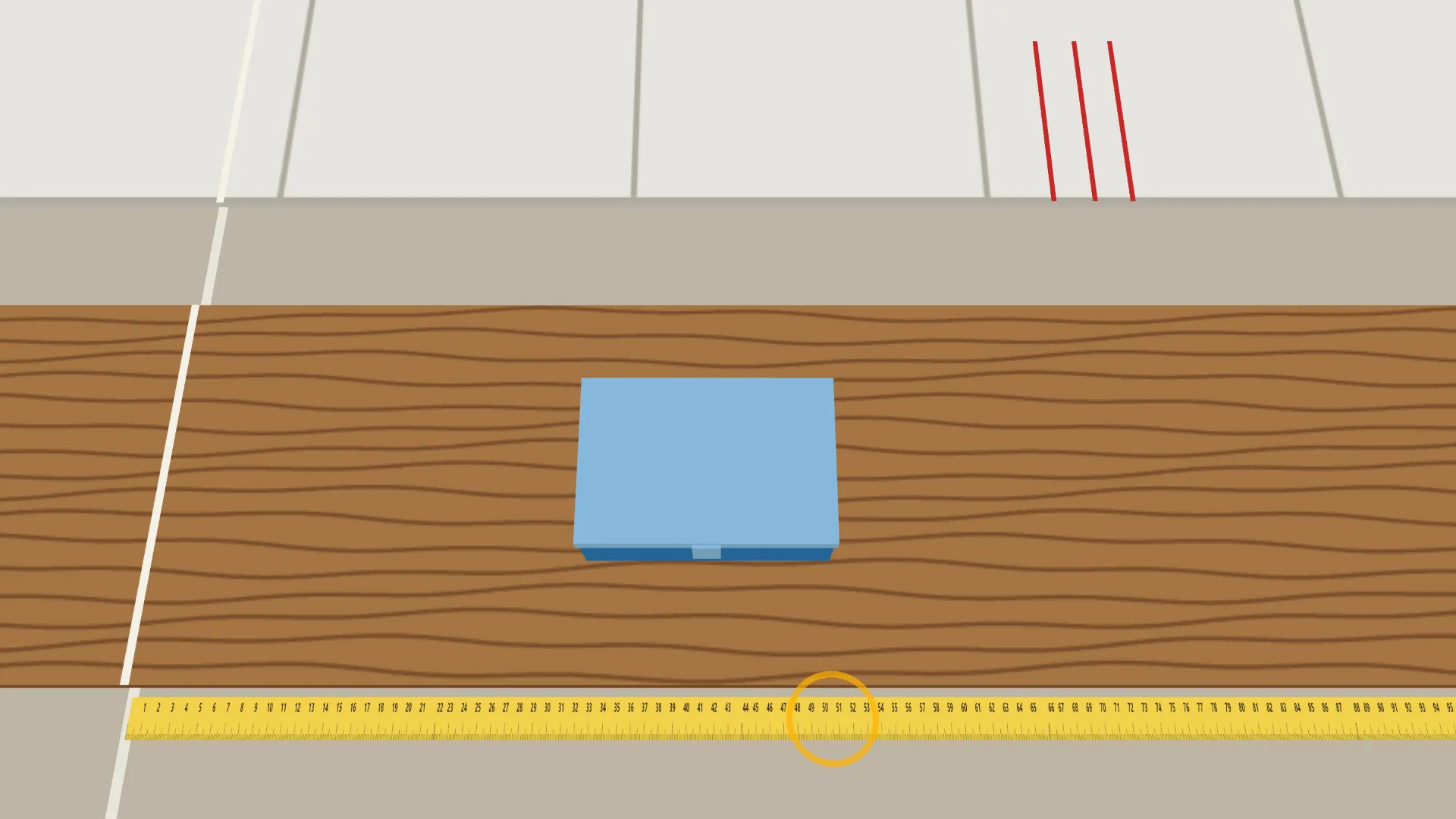
Interactive 3D Experiment
Loading simulation…
What to observe
- The box slides farthest on glass, then on the tile, wood and cloth, and stops soonest on sandpaper.
- The rougher the surface, the shorter the distance — friction is greatest on the roughest surface.
- Friction always acts backwards, opposite to the direction of motion.
Safety
- Give the object very nearly the same gentle push every time — this keeps the test fair.
- Use the same object with the same flat base on every surface, and keep its weight unchanged.
- Each surface must be flat, level, clean and dry. A sloping or dusty surface gives false readings.
- Let the object stop on its own; do not touch it once it has been released.
- Mark the start and stopping points clearly and measure in a straight line between them.
- Repeat each trial two or three times on every surface and take the average.
- Handle the glass sheet with care and check its edges before use.
Notes
- Science Spark: friction is not always something to fight. Fish, aeroplanes, ships and high-speed trains have smooth, streamlined shapes so they slip through water or air with the least friction.
- The distances in the simulation come from a simple model (about 92, 74, 51, 28 and 15 cm for glass, tile, wood, cloth and sandpaper); each push varies a little, as real pushes do.