
Turning Lime Water Milky — Detecting a Chemical Change
Aim
Show that new substances form in a chemical change, and use lime water to detect carbon dioxide gas.
Apparatus
- Two glass tumblers, marked A and B
- Freshly prepared lime water, and tap water
- Two clean drinking straws (one for each tumbler)
- Two test tubes with a stand, a cork and a bent delivery tube
- Vinegar or lemon juice, and baking soda
- A teaspoon, a dropper and a stopwatch
Procedure
- Blow gently through a straw into tumbler A, which has tap water.
- Blow gently through a fresh straw into tumbler B, which has lime water.
- Leave tumbler B undisturbed and look at its bottom.
- Put a teaspoonful of vinegar in a test tube.
- Add a pinch of baking soda. Watch and listen.
- Fit the cork and pass the gas through lime water in the second tube.
- Repeat with baking soda and plain water instead of vinegar.
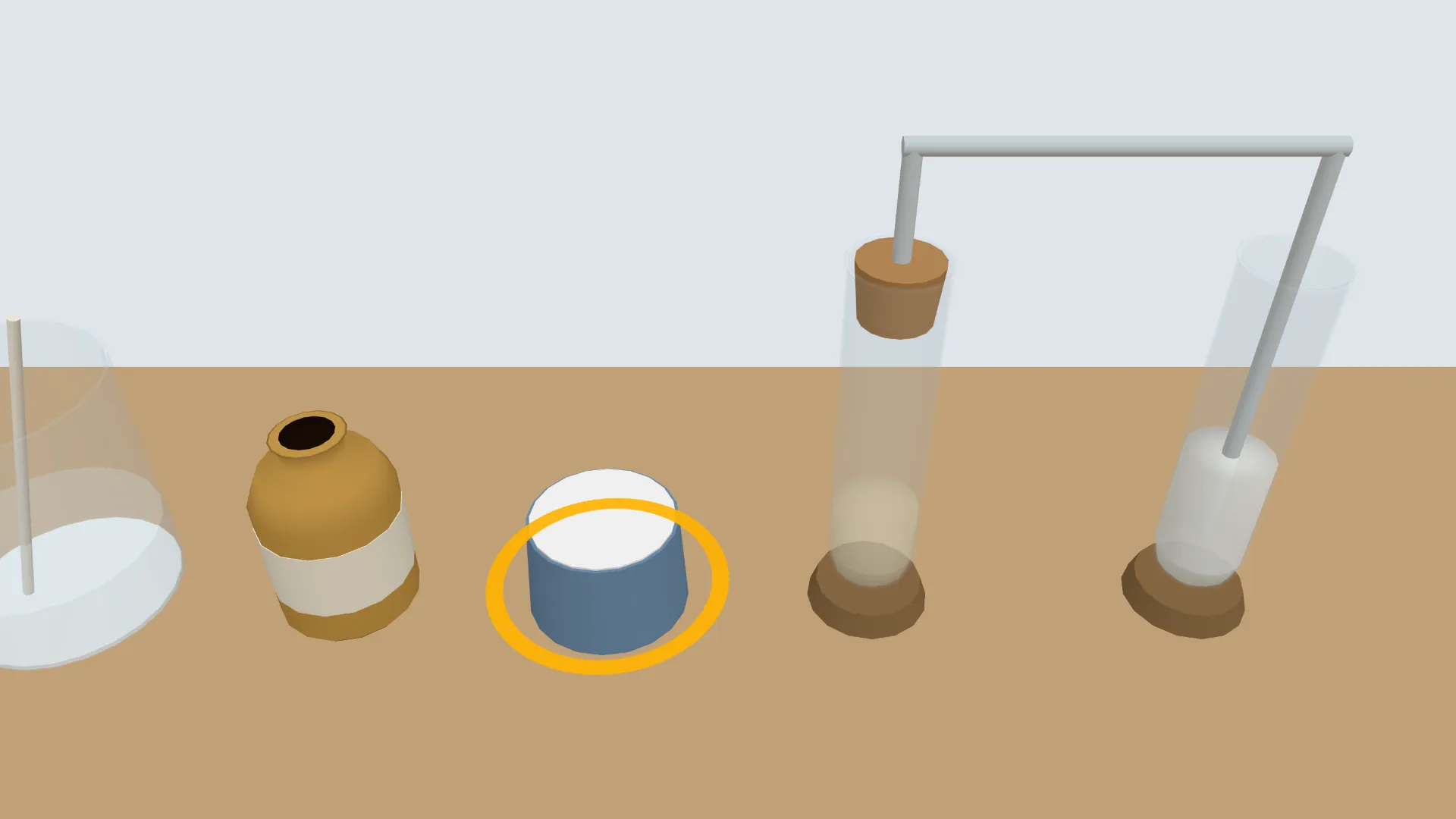
Interactive 3D Experiment
Loading simulation…
What to observe
- Exhaled air does nothing to tap water but turns lime water milky.
- The white solid in the milky lime water is calcium carbonate. It settles at the bottom.
- Vinegar and baking soda fizz and give off a gas.
- That gas also turns lime water milky, so it is carbon dioxide.
- Baking soda in plain water gives no bubbles.
Notes
- The milkiness is calcium carbonate, the same substance as marble, chalk, eggshells and seashells.
- Blow out gently through the straw and never suck in. Lime water is caustic.
- Use a separate clean straw for each tumbler. Never share straws.
- Lime water irritates skin and eyes. Wash a splash off at once and wash your hands at the end.
- Add the vinegar a little at a time, because the mixture froths.
- Never seal the test tube tightly. The gas must escape through the delivery tube, pointed away from everybody.