
Constructing a Hierarchy and Jurisdiction Chart of the Indian Judiciary
Aim
To draw the hierarchy of courts in India and show the jurisdiction and work of each level: the Supreme Court, the High Courts and the Subordinate Courts.
Apparatus
- Chart paper
- Ruler
- Pencil
- Coloured pencils
- The textbook's Fig. 4.5 (pyramid), Fig. 4.7 (tribunals) and High Court table
Procedure
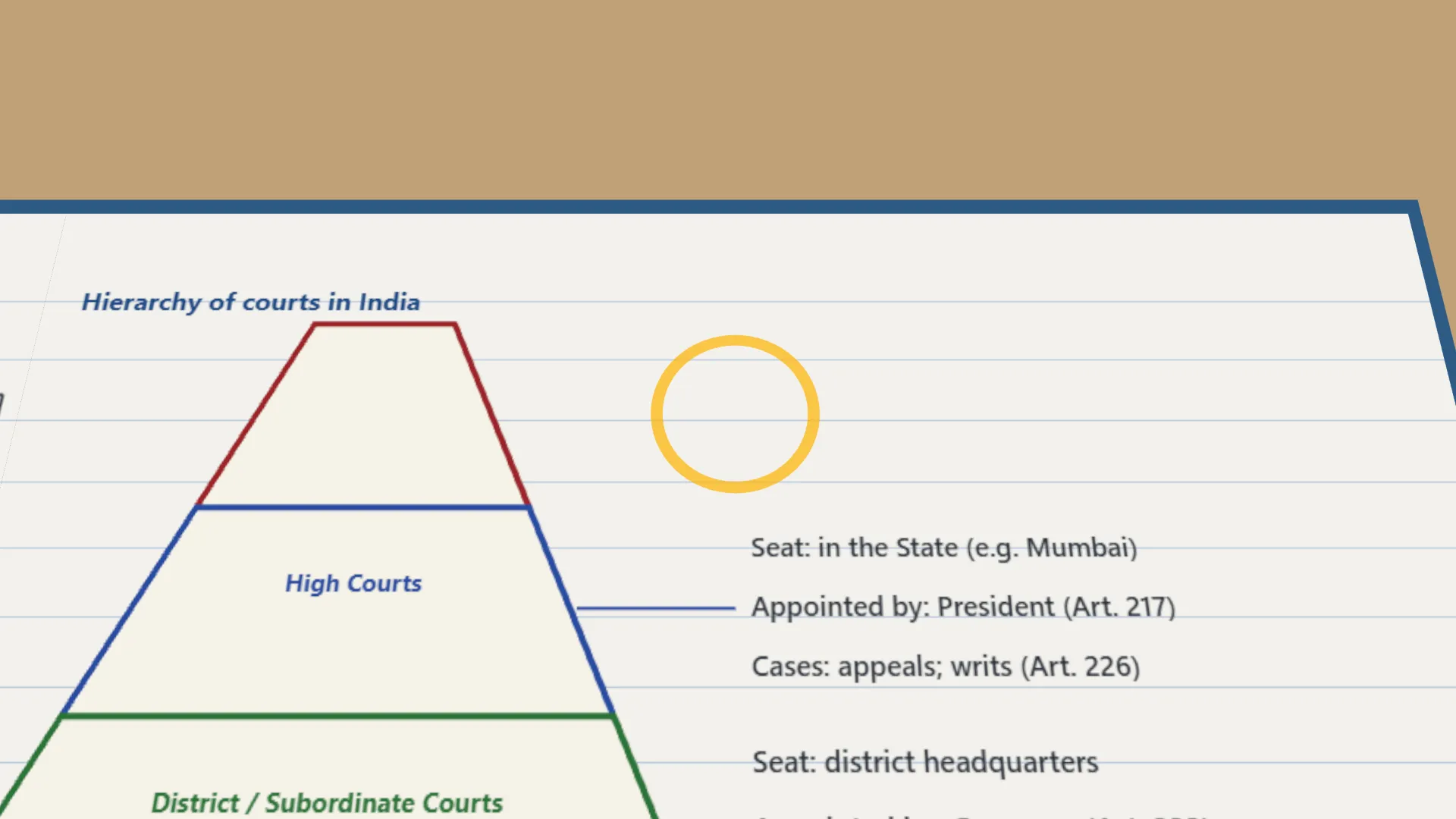
- Draw a three-tier pyramid. Put each court on its tier - Supreme Court at the top.
- Beside each tier, write its seat, who appoints its judges and one type of case.
- Take five States or UTs and find the High Court of each. Note the ones that share one.
- Add a branch with three tribunals and the disputes each one handles.
- Sort the case cards into the Supreme Court's four jurisdictions and colour them on the pyramid.
- Record each court and tribunal in the observation table.
Interactive 3D Experiment
Loading simulation…
What to observe
- The Supreme Court is at the top, the High Courts in the middle and the district courts at the base.
- Some States and UTs share one High Court.
- The Supreme Court has original, appellate, advisory and writ jurisdiction.
Notes
- Refer accurately to the Articles of the Constitution while labelling the diagram.
- Keep the pyramid's proportions and labels clear and easy to read.