
Handspans to Scales — Why We Need Standard Units
Aim
Measure the same table with a handspan and with a metre scale, and see why standard units give more reliable results.
Apparatus
- Science notebook / lab record and pencil
- A metre scale or measuring tape
- A 15-cm plastic scale
- A classroom table or desk
Procedure
- Measure the table with your handspan. Count the handspans; call the leftover "slightly more" or "slightly less".
- Write your handspan reading in the observation table.
- Compare it with at least four classmates' readings for the same table.
- Measure the same table with a metre scale and read it in centimetres.
- Compare the metre-scale readings. Are they close to each other?
- Discuss why the handspan readings differed but the metre-scale readings did not.
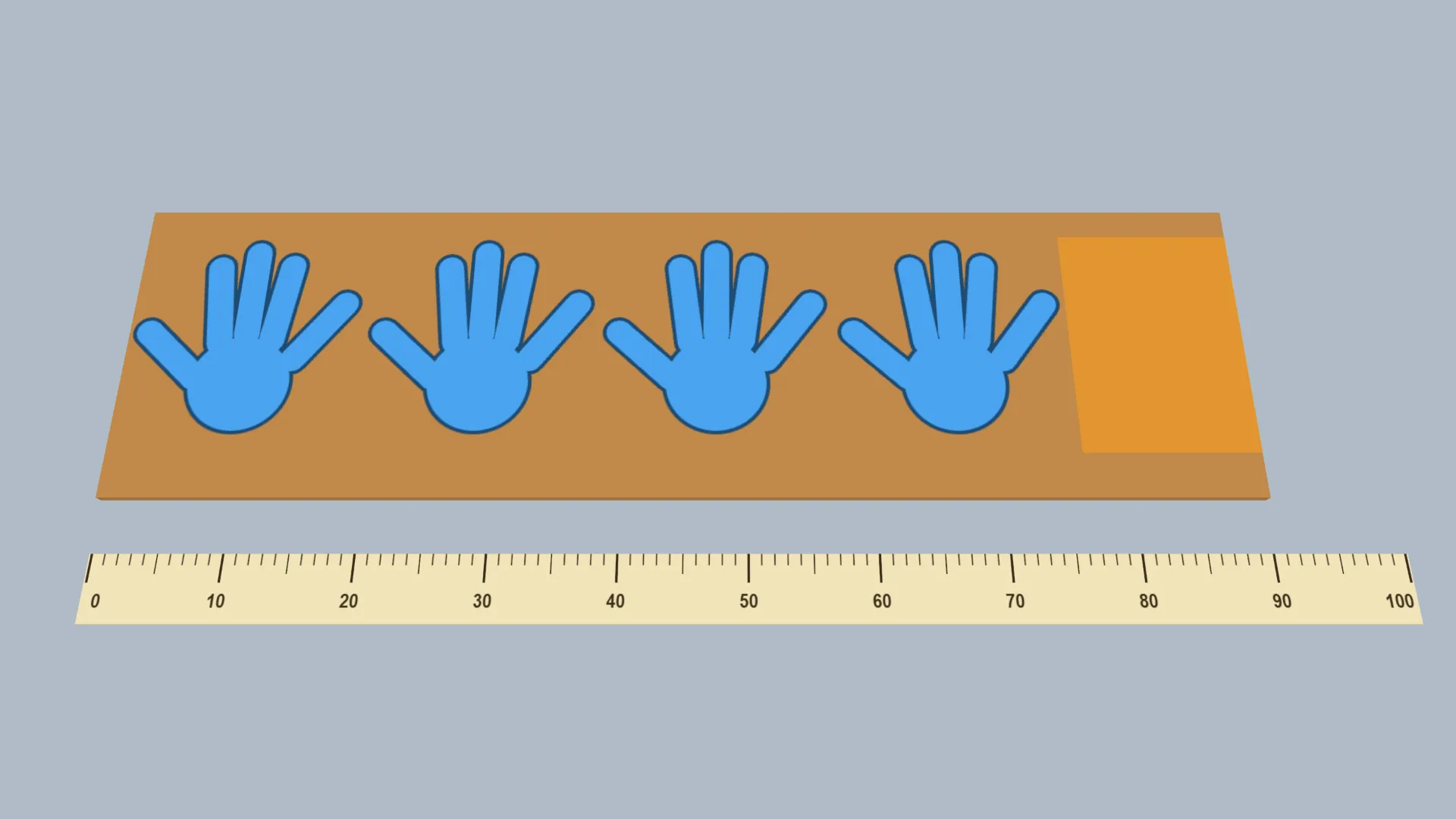
Interactive 3D Experiment
Loading simulation…
What to observe
- Do all the students count the same number of handspans?
- Do all the metre-scale readings agree?
- Why does a standard unit give a more reliable result?
Notes
- The metre was first defined in 1793 as one ten-millionth of the distance from the North Pole to the Equator, measured along a line through Paris. Today it is defined using the speed of light.