
Everyday Scientists — Spotting the Scientific Method Around Us
Aim
To identify and analyse examples of the scientific method being used by people in ordinary, non-laboratory occupations.
Apparatus
- Science notebook / lab record and pencil
- A ballpoint pen (preferably one that has stopped writing, or any pen for demonstration)
- Chart paper and sketch pens (for the flow-chart activity)
Procedure
- In groups of four, choose one everyday occupation, for example cook, electrician, cycle-repair person, gardener or tailor.
- Write down a problem that person might face in their work.
- Decide what they would observe, what question they would ask, what guess they would make and how they would test it.
- Present your group’s example to the class as a short role-play or a spoken explanation.
- Listen to at least two other groups and note their examples in the table.
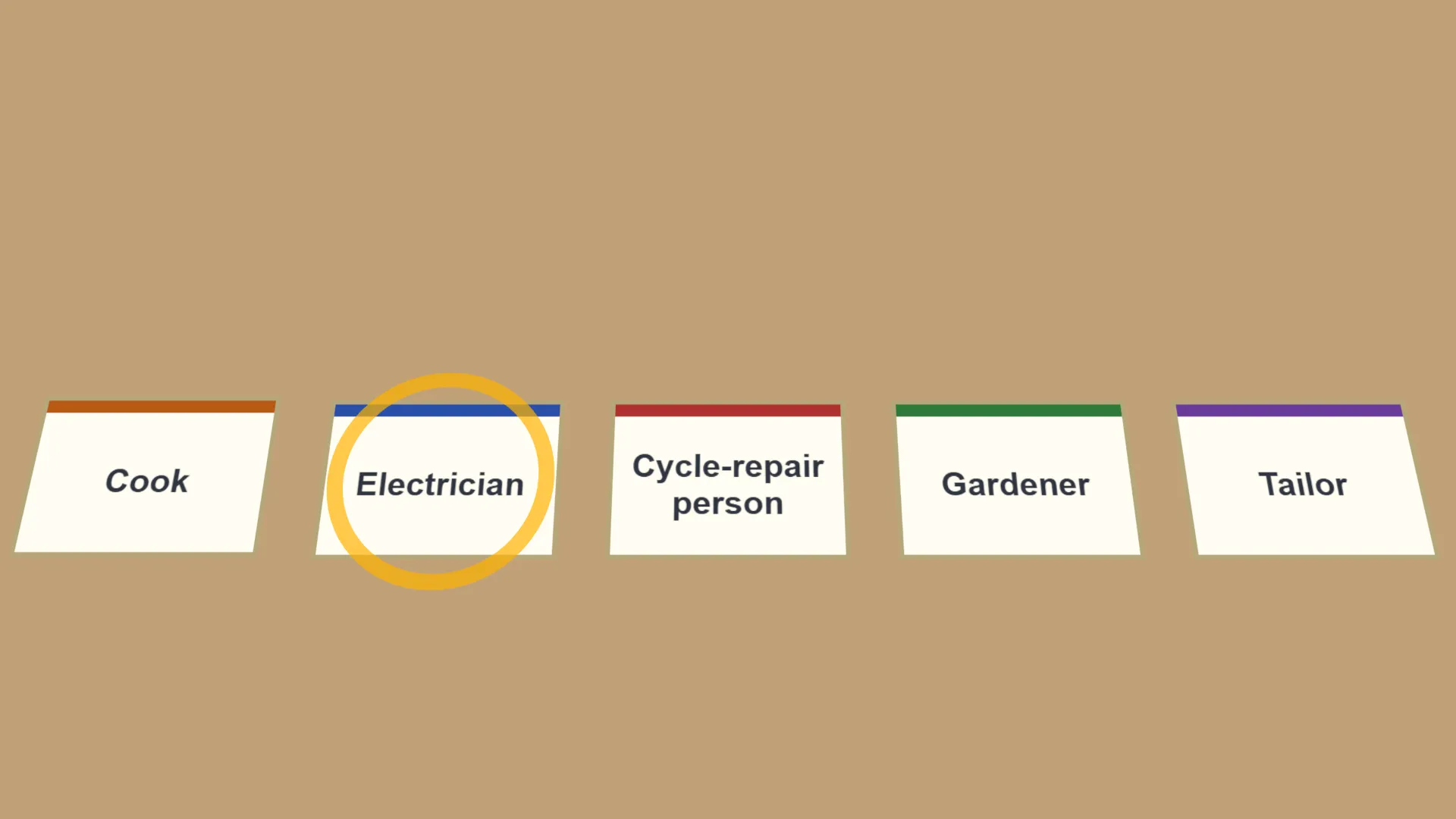
Interactive 3D Experiment
Loading simulation…
What to observe
- Every occupation follows the same steps - observe, question, guess, test - to solve its problem.
- Science is everywhere, not only in laboratories.
Safety
- Discuss and act out the occupations only. Never actually attempt the task, especially anything involving electricity, gas, flames, blades or machinery.
- Do not approach, follow or interview an unknown worker on your own. Speak to people only with your teacher or a parent present.
- Speak about every occupation with respect. Role play must never mock a person’s work, appearance, dress or language.
- Use mimed actions or paper props instead of real tools, and move desks slowly with a partner.
- Keep sketch-pen caps closed when not writing, and do not draw on skin, clothes, desks or anyone’s belongings.
Notes
- Velcro was invented after a Swiss engineer, George de Mestral, examined the burrs stuck to his dog’s fur and his own trousers under a microscope in 1941. His curiosity about an everyday nuisance led to a fastener now used all over the world!