
Comparing Schools of Thought: Buddhism and Jainism
Aim
To compare the lives and core teachings of Siddhārtha Gautama (the Buddha) and Prince Vardhamāna (Mahāvīra), and to identify ideas shared by Buddhism and Jainism.
Apparatus
- Notebook
- Textbook
- Coloured pencils
- A ruler
- Chart paper for the comparison chart
Procedure
- Read the sections on Buddhism and Jainism. Note the birthplace, family and age at which each founder left home.
- In pairs, fill in the comparison table, for example birthplace, age of renunciation and place of enlightenment.
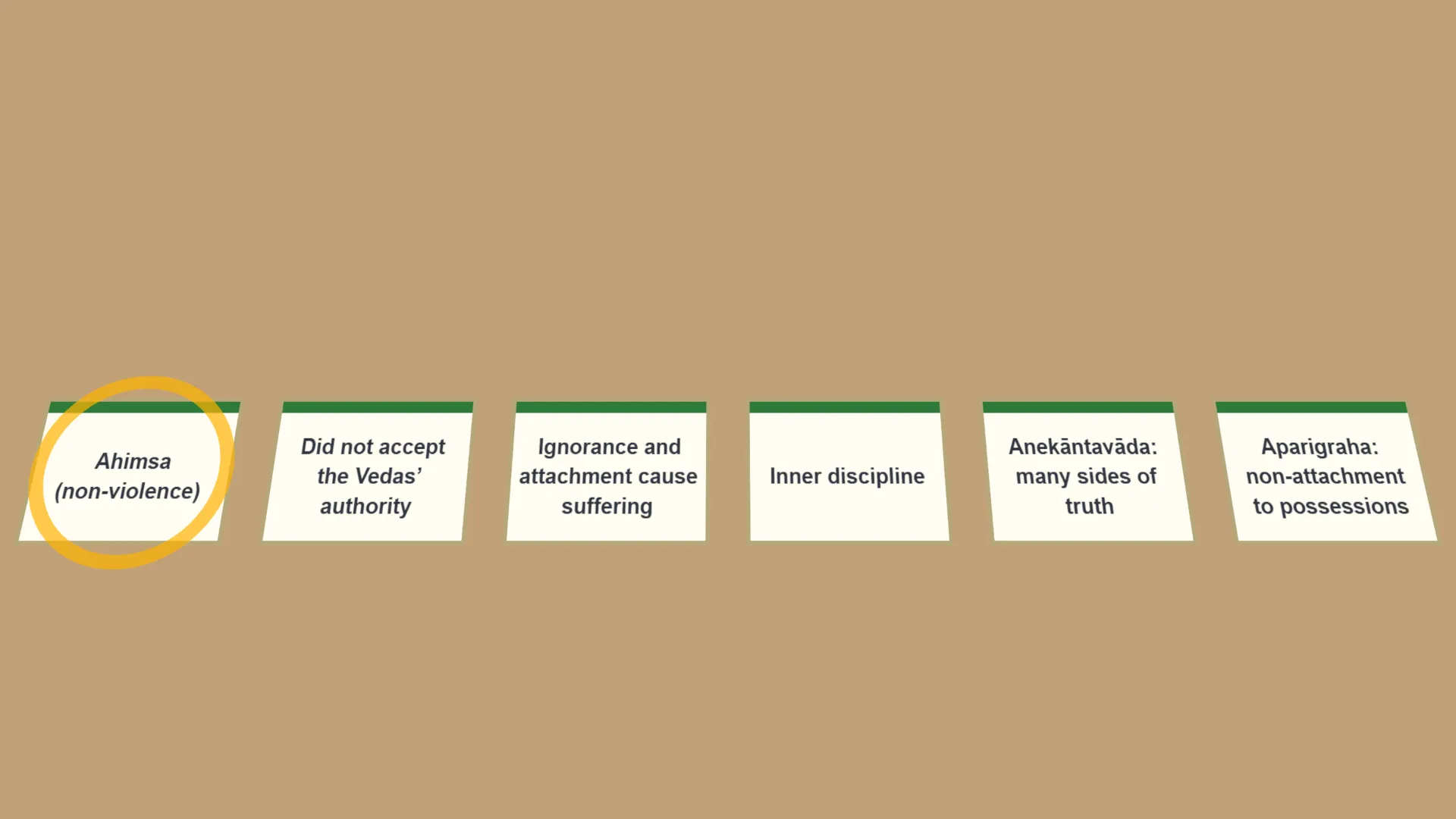
- Draw two overlapping circles labelled Buddhism and Jainism. Write shared ideas in the middle and the other ideas in the outer parts.
- With a partner, discuss why neither Buddhism nor Jainism accepted the authority of the Vedas.
- Read aloud the sayings of the Buddha and of Mahāvīra, and note the value each expresses.
- Share your comparison chart with the class and discuss any further similarities or differences.
Interactive 3D Experiment
Loading simulation…
What to observe
- Both founders were born into royal families and left home to seek the truth.
- Buddhism and Jainism share ahimsa (non-violence) and did not accept the authority of the Vedas.
- Each also has ideas of its own.
Safety
- Discuss different schools of thought and belief systems respectfully.
- Label the comparison chart and the circles neatly and clearly.
Notes
- The word Jain, or jaina, comes from jina, meaning “conqueror”. This does not refer to the conquest of territory or enemies, but to the conquest of ignorance and attachment, so as to reach enlightenment.